Power is the constraint
AI capacity is gated by grid connections. Offshore energy is uncontested and sits next to every coastal city.
AI compute · Powered by the ocean
UK-hosted GPU capacity for AI, running on a wave-powered offshore platform. No grid connection, no fresh water, no carbon from the power supply.
The problem
Data-centre electricity demand is heading for around 945 TWh by 2030, roughly double today. In the UK, new multi-megawatt grid connections take years, and industrial power is among the most expensive in Europe. The sea has the energy and the cooling. It needs infrastructure built for it.
AI capacity is gated by grid connections. Offshore energy is uncontested and sits next to every coastal city.
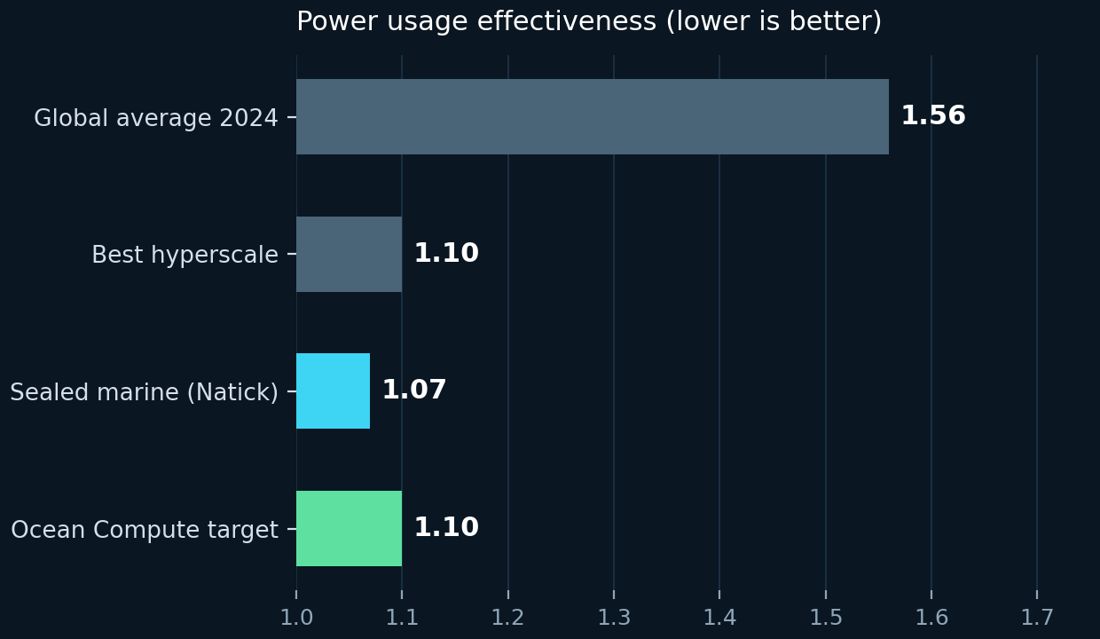
Cold seawater removes heat without chillers, cooling towers or fresh water, cutting the energy overhead of every rack.
Every marine data centre so far has relied on a power cable from land. Generating on the platform removes that constraint.
The platform
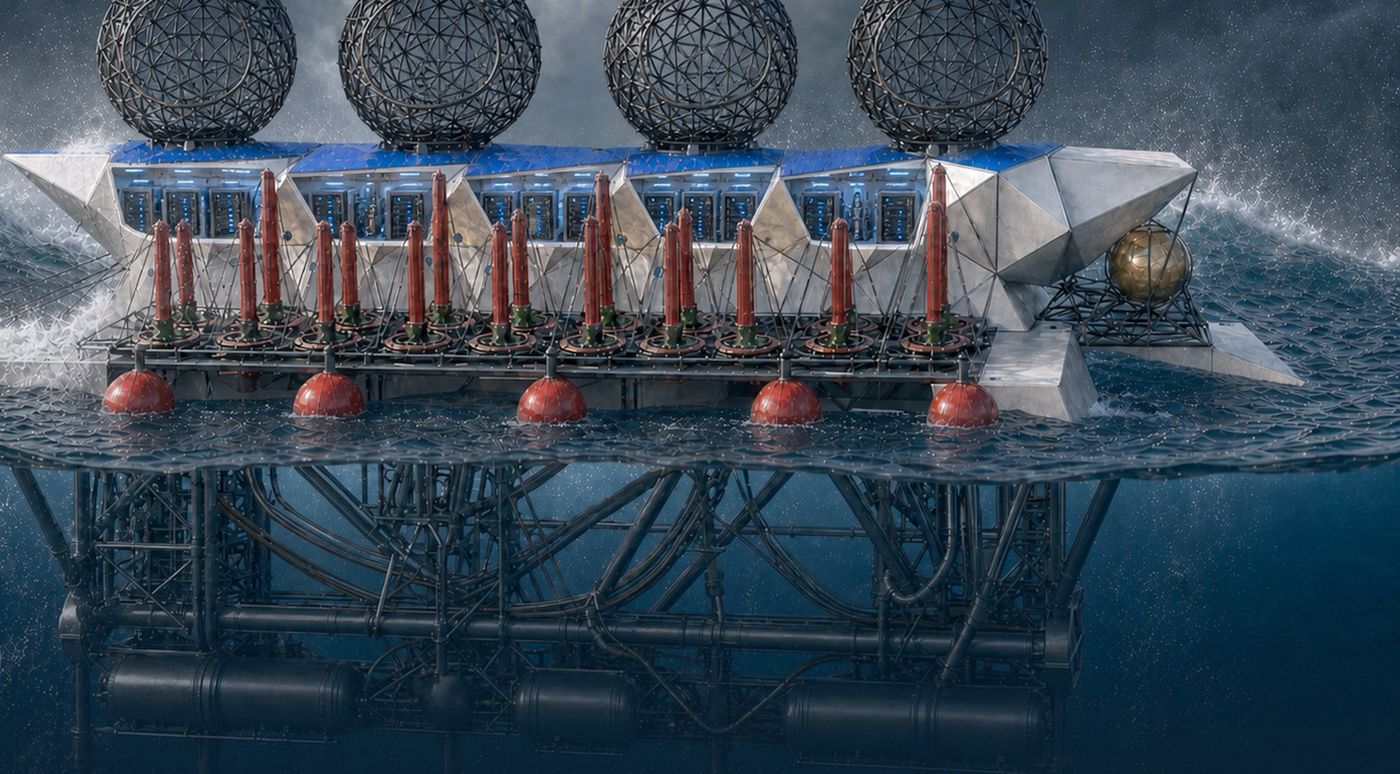
A composite platform carries an array of wave floats driving direct-drive linear generators, with a battery buffer and seawater heat exchangers on the same hull. Data travels to shore by microwave link.
The platform, wave technology and power generation are designed, built and operated by our platform partner, H2Terminals Limited. Ocean Compute leases space and power on the platform and owns and operates the compute.
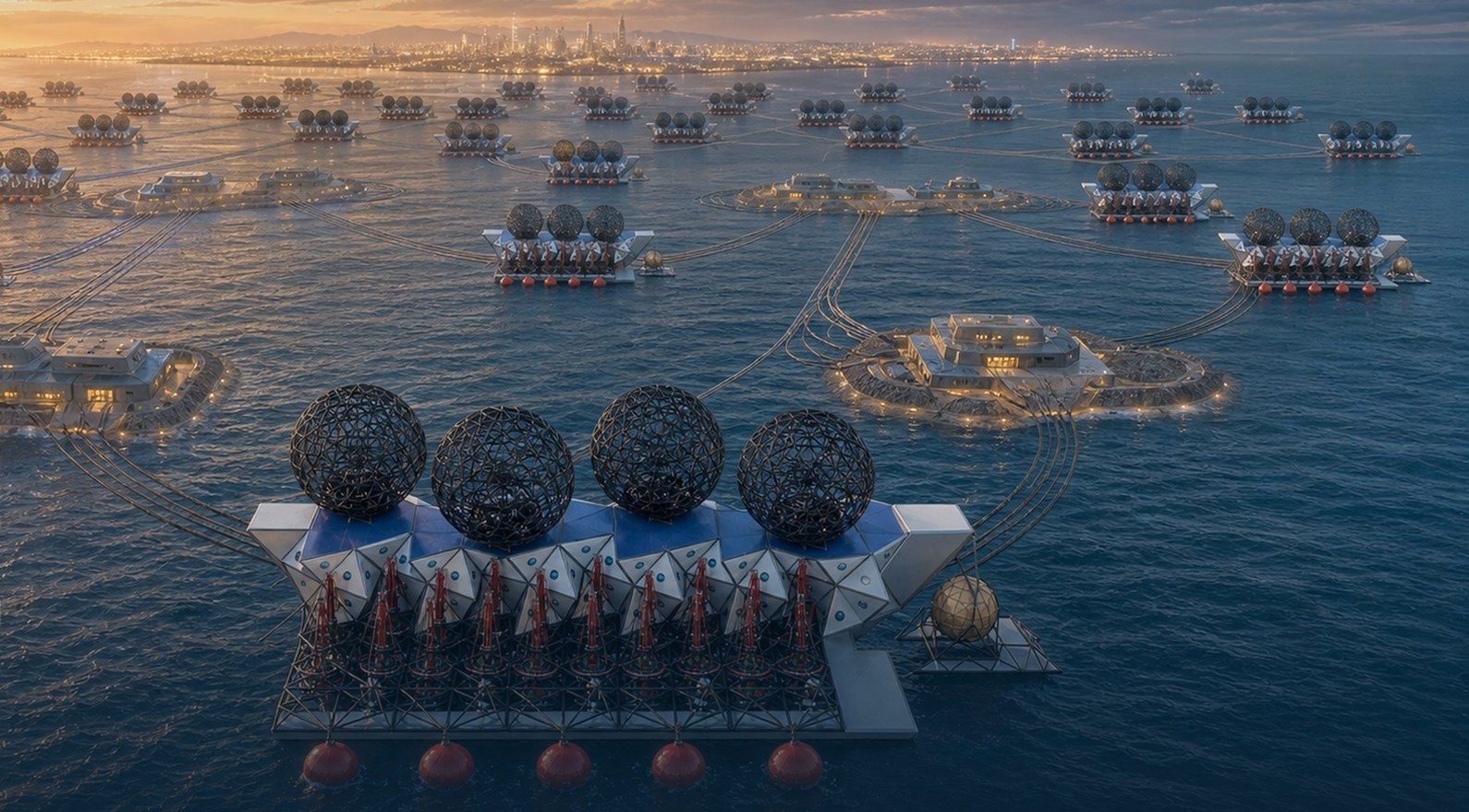
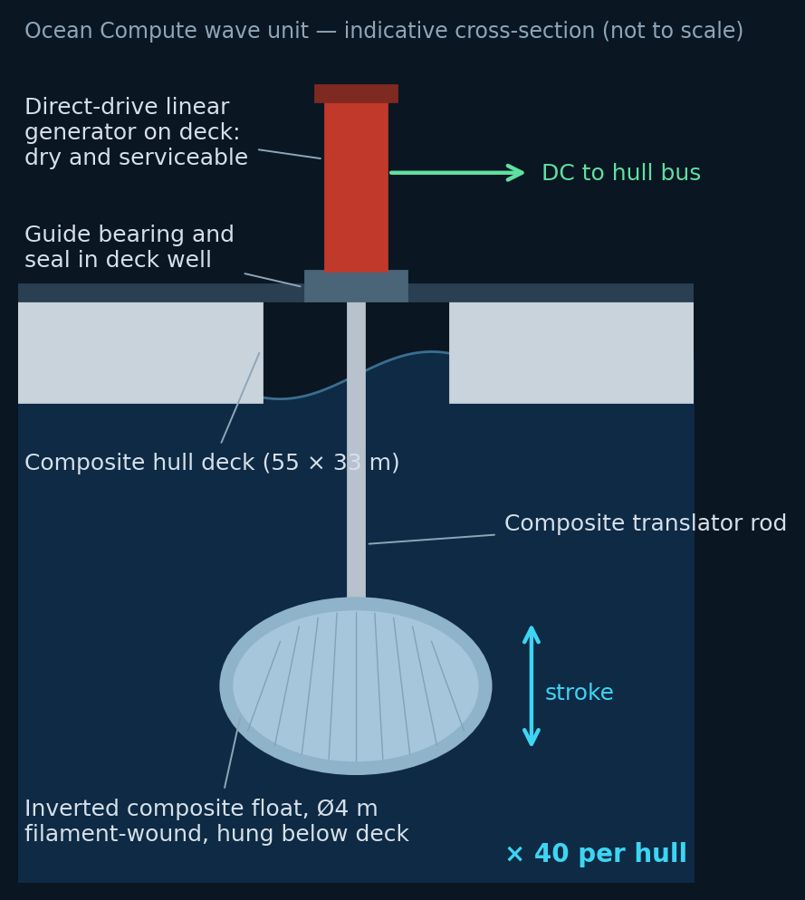
4 m composite floats move with the swell, hung below the deck.
Linear generators on deck, dry and serviceable. No turbine or gearbox.
Power is conditioned and stored on the hull to smooth the sea state.
AI computing runs on the platform, right beside the power source.
Titanium plate exchangers reject heat to seawater in a closed loop.
Ocean Compute
Ocean Compute owns and operates the compute on the platform: the GPU servers, networking, storage and the link to shore. Capacity is aimed first at AI training and batch workloads, which suit an offshore site and flexible scheduling.
Current-generation AI accelerators, built to validated data-centre designs.
Powered by the sea and cooled by it. No grid draw, no fresh water and no carbon from the power supply.
Diverse point-to-point microwave links on motion-stabilised antennas, with satellite backup for management traffic.
Power & cooling
Wave output changes with the sea. We plan the compute around dependable power, not peak output.
Security & governance
Ocean Compute controls access to its data halls. Platform staff enter only for defined maintenance, escorted and logged.
All traffic to and from the platform is encrypted with keys held only by Ocean Compute.
Ocean Compute Limited is a UK company, wholly owned by its founder and separate from its platform partner.
We follow UK and US export-control rules for advanced computing, including customer checks and end-use restrictions.
About us

Founder & Director
Gerry founded Ocean Compute to bring AI compute to one of the UK's largest untapped energy resources: the sea. He is the company's director and sole shareholder. He is also co-founder and CEO of H2Terminals, the offshore energy infrastructure company that develops the wave-powered platform.
Gerry is a director of Lowtherbridge, a hydrogen fleet transport service. He has helped raise Innovate UK funding for a zero-emission internal combustion engine running in a closed-loop system, and for an AI solution that automates tax returns for freelancers.
His career began in financial software, where he raised £1m and designed the world's first operational loss database, in collaboration with Cambridge Judge Business School. He went on to advise growth companies as a Regional Director at Boardroom Advisors from 2018 to 2023, and founded Vigorate to mentor and fund young founders.
Join us
We are looking for experienced people who want to build a new kind of AI infrastructure. If that is you, we would like to hear from you.
Non-executive directors with experience in data centres, infrastructure finance or technology governance.
Leadership for GPU cluster operations, uptime and on-site engineering in a marine environment.
Design and run high-capacity links to shore, end-to-end encryption and physical security.